By clicking “Accept All Cookies”, you agree to the storing of cookies on your device to enhance site navigation, analyze site usage, and assist in our marketing efforts. View our Privacy Policy for more information.
The 4 Pillars of Elite Speed Development (For Athletes & Adults)
Speed is the great separator. In sport, speed determines who gets to the ball first, who wins separation, who controls the play, and who dictates pressure. But one of the biggest misconceptions — especially among adult trainees and parents of youth athletes — is that speed is purely genetic.
By
February 1, 2026
Related

Speed is the great separator.
In sport, speed determines who gets to the ball first, who wins separation, who controls the play, and who dictates pressure. But one of the biggest misconceptions — especially among adult trainees and parents of youth athletes — is that speed is purely genetic.
It’s not.
Speed is a skill.
And like any skill, it can be developed, refined, and dramatically improved with the right system.
At KBP, we break elite speed into four essential pillars. Miss any one of them, and you stay average. Build all four, and you unlock your athletic ceiling.
1. Acceleration: The Foundation of Real-World Speed
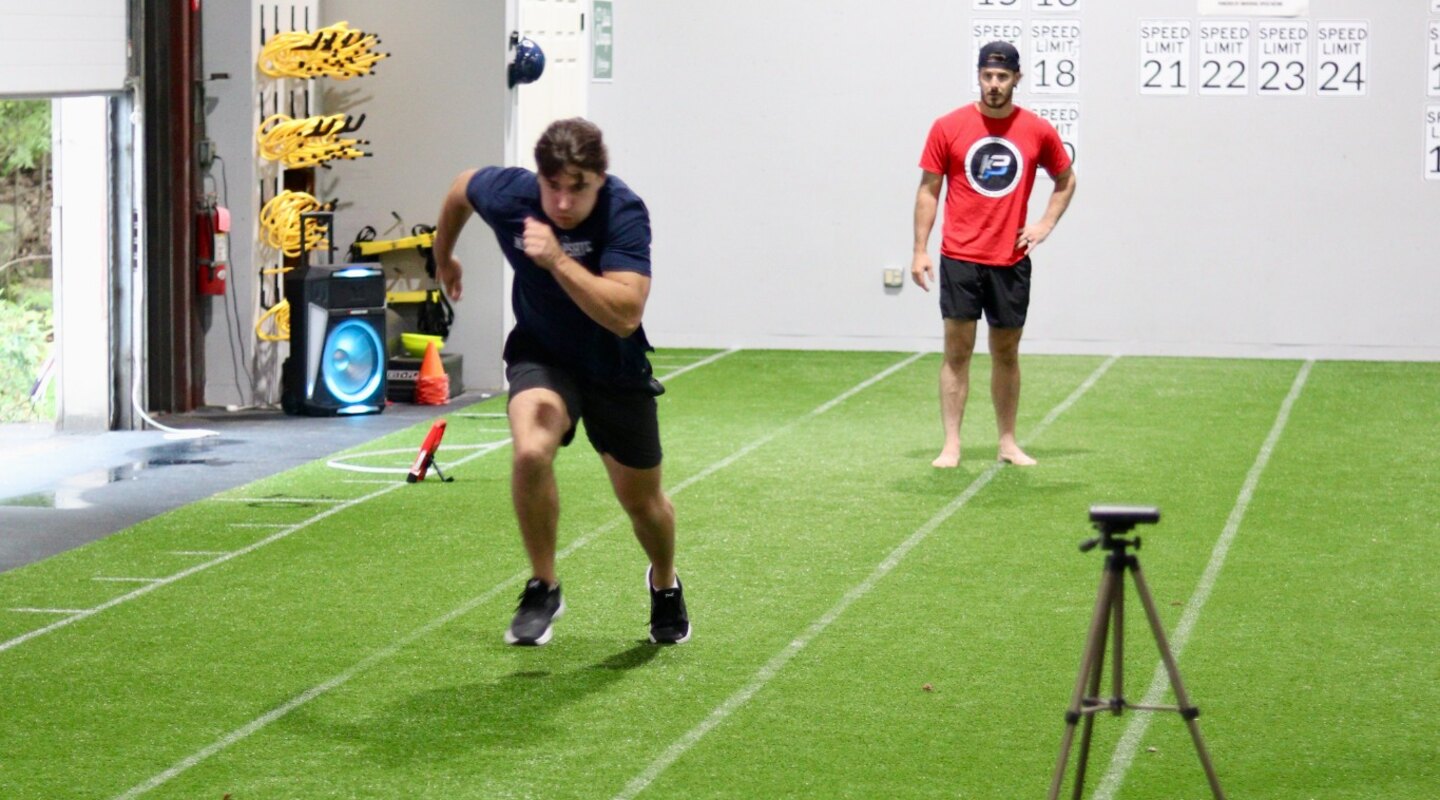
Acceleration is your ability to go from zero to fast — quickly.
In most sports, athletes rarely hit top speed. What matters most is the first 3–5 steps.
For adults, acceleration training reawakens explosiveness that’s been dormant for years. For youth athletes, this is where confidence and separation are built.
What improvement looks like:
- Quicker first step
- More powerful drive angles
- A noticeable “pop” off the ground
- Better outcomes in open play
Training examples:
- 10–20 yard sprints
- Wall and piston drills
- Low heel recovery marches
- Sled pushes with intent
Acceleration isn't about grinding the ground — it's about learning mechanics that create forward projection.
2. Max Velocity: Learning to Sprint the Way Athletes Sprint
This is the phase where athletes hit their peak speed — tall posture, long strides, elastic bounce.
Most adults haven’t sprinted at even 80% in years... and it shows. But max velocity training is one of the most powerful ways to improve:
- Hamstring resilience
- Posture
- Elastic strength
- Neurological efficiency
- Overall athletic confidence
Training examples:
- Fly 10s & Fly 20s
- A-skips, dribbles, B-skips
- Upright mechanics work
- Smooth build-ups
Max velocity isn't just “running fast.” It’s learning to use the ground like a spring, not a brake.
3. Elastic Power: The Missing Link in Most Training Programs
Most adults train strength like powerlifters and wonder why they feel slow.
Strength without elasticity creates a heavy, sluggish mover.
Elastic power is your body’s ability to store and release energy. This is the “bounce,” the feel of being light on your feet, the ability to transition quickly.
Training examples:
- Hurdle hops
- Bounding progressions
- Jump variations
- Light medicine ball throws
Elastic work teaches your body to use speed, not just force.
4. Strength Foundation: The Engine Behind All Speed
You can’t produce force if you’re weak.
But the key is athletic strength, not bodybuilding strength.
We build strength that transfers to speed — not slow, grinding lifts that teach your body the opposite of what fast movement requires.
Training examples:
- Trap bar deadlifts (fast intent)
- Split squats & rear-foot elevated work
- Hamstring curls (Nordic variations for athletes)
- Anti-rotation and trunk stability
Strength must support movement — not replace it.
The KBP Takeaway
Speed isn’t about luck or genetics.
It’s about mechanics, intent, progressive exposure, and the right training model.
Whether you're a competitive athlete or an adult trying to regain your edge, the four pillars create a clear path. Build them — and your body begins to perform the way you always knew it could.