By clicking “Accept All Cookies”, you agree to the storing of cookies on your device to enhance site navigation, analyze site usage, and assist in our marketing efforts. View our Privacy Policy for more information.
Train Like an Athlete for Life
Athletic training isn't only for competitive athletes. Learn why strength, power, movement, coordination and physical challenge become even more important as we move through our 30s, 40s, 50s and beyond.
By
October 12, 2026
Related

Estimated Read Time: 8 minutes
There is a point in life when a lot of people stop considering themselves athletes. For some, it happens after high school. For others, it happens after college. Eventually the competitive schedule disappears, work becomes more demanding, families grow, responsibilities pile up, and training becomes something completely different.
Instead of training to perform, we start exercising to stay healthy. We start worrying about calories, steps, weight, cholesterol and whatever number our watch gives us that day. Those things aren't irrelevant, but somewhere along the way we can lose something much bigger.
We stop asking our bodies to perform.
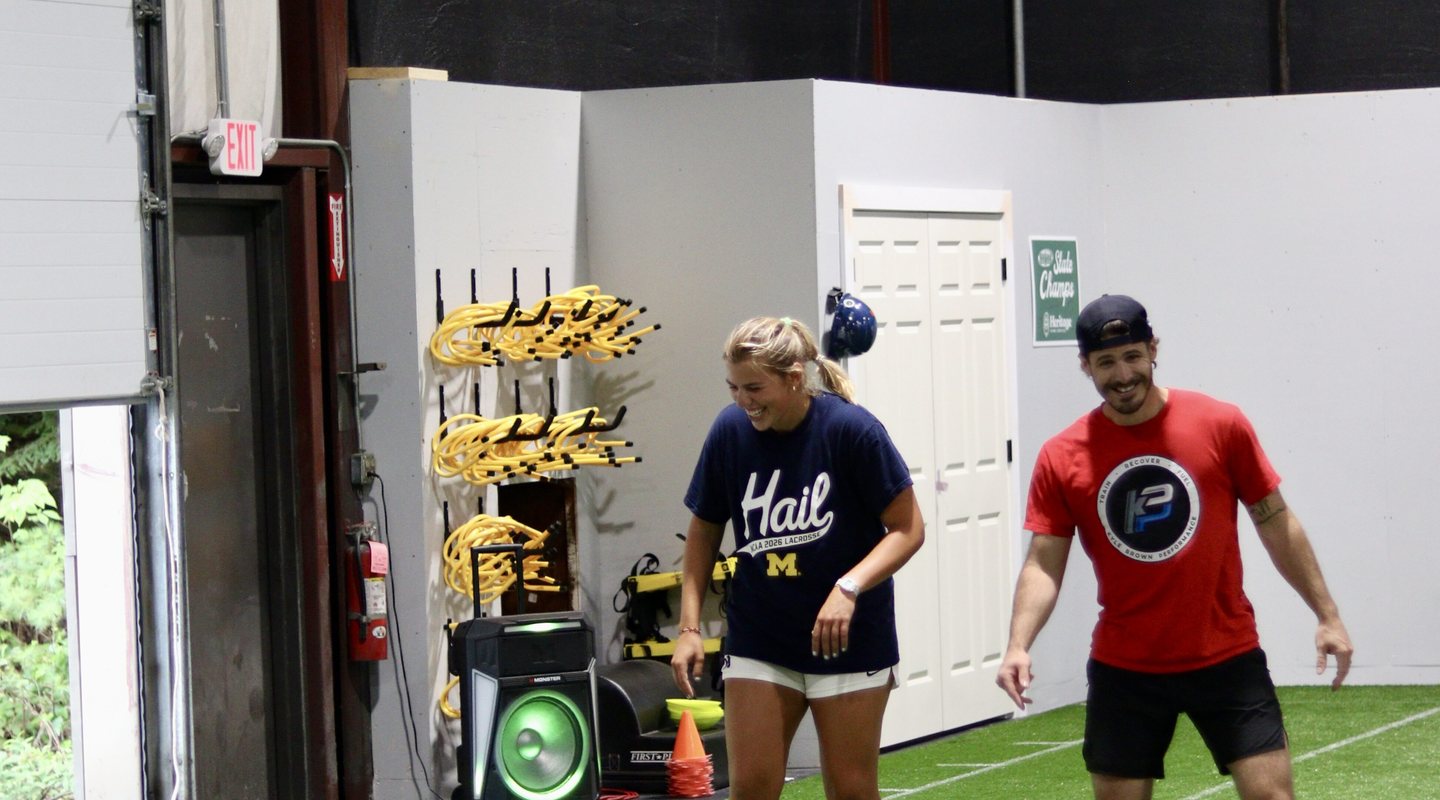
One of the phrases we use constantly at Kyle Brown Performance is “Be An Athlete.” I don't see that as a slogan reserved for the middle school and high school athletes who train with us. I think it might actually become more important as we get older.
Being an athlete at 40 doesn't mean pretending you're 18. It means refusing to unnecessarily give up physical abilities simply because you haven't used them in a while.
We Slowly Stop Doing Things
Think about the last time you sprinted.
Not jogged. Not got on a treadmill and ran at a comfortable pace. Actually sprinted.
When was the last time you jumped as high as you could? Changed direction quickly? Threw something explosively? Picked up something genuinely heavy? Tried to learn a new physical skill?
For a lot of adults, the answer is years.
The interesting thing is that we usually don't make a conscious decision to stop doing these things. Nobody wakes up on their 35th birthday and decides they're done being explosive.
Life gradually removes them for us.
Sports end. Work takes up more time. Kids need to get to practice. We sit more. Our routines become more predictable. When we do exercise, we often gravitate toward the things we're already comfortable doing.
Eventually we stop sprinting because we haven't sprinted. We stop jumping because we haven't jumped. We avoid certain movements because they feel awkward. Then we start telling ourselves we “can't” do things that we simply haven't asked our bodies to do in years.
That distinction matters.
What Happens After 35?
Thirty-five isn't a magical number where the human body suddenly falls apart. But I do think somewhere around that age many people begin noticing the consequences of how they've spent the previous decade.
Things feel different.
Recovery isn't exactly what it was at 22. Sitting all day starts showing up. Old injuries might make themselves known. Losing strength becomes easier if you aren't actively trying to maintain it.
This is where I think adults have a choice.
You can begin organizing your life around what your body no longer does, or you can intentionally train to preserve and improve what it still can do.
That's a very different mindset.
Training isn't going to stop aging. Nothing will. The goal isn't to pretend you're getting younger.
The goal is to remain physically capable for as long as possible.
Training Should Expand Your Life
This is one of the biggest differences between how I view training and how I think many adults have been taught to view exercise.
Exercise is often presented as punishment.
You ate too much this weekend, so you need to work it off. You want to lose ten pounds, so you need to burn more calories. You need to suffer for an hour because you've been sitting all day.
I don't find that particularly inspiring.
I'd rather train because I want my body to be capable of doing more.
I want to be strong enough to pick things up. I want to be conditioned enough to go somewhere and not worry about whether I can keep up. I want to move well enough that I don't have to analyze every physical activity before agreeing to participate.
I want to be able to play.
That's a word adults don't use enough.
Kids play constantly. Adults gradually stop.
There is something powerful about training in a way that preserves your ability to say yes.
Yes, I'll ski.
Yes, I'll hike.
Yes, I'll play hockey.
Yes, I'll race my kid.
Yes, I'll help move that.
Yes, I'll try it.
Your training should give you options rather than slowly taking them away.
You Still Need to Be Challenged
This is probably the part some adults don't want to hear.
Training should occasionally be hard.
That doesn't mean every workout should destroy you. In fact, constantly trying to leave the gym completely exhausted is usually a poor way to measure whether training is working.
But you need challenge.
Your body adapts to what you ask it to do. If you stop asking much of it, you shouldn't be surprised when its capabilities begin shrinking.
Strength training should require you to produce force. Conditioning should occasionally make you uncomfortable. Balance and coordination should be challenged. You should move in different directions. You should develop and maintain power.
That might look different at 55 than it does at 18.
That's fine.
Different doesn't mean absent.
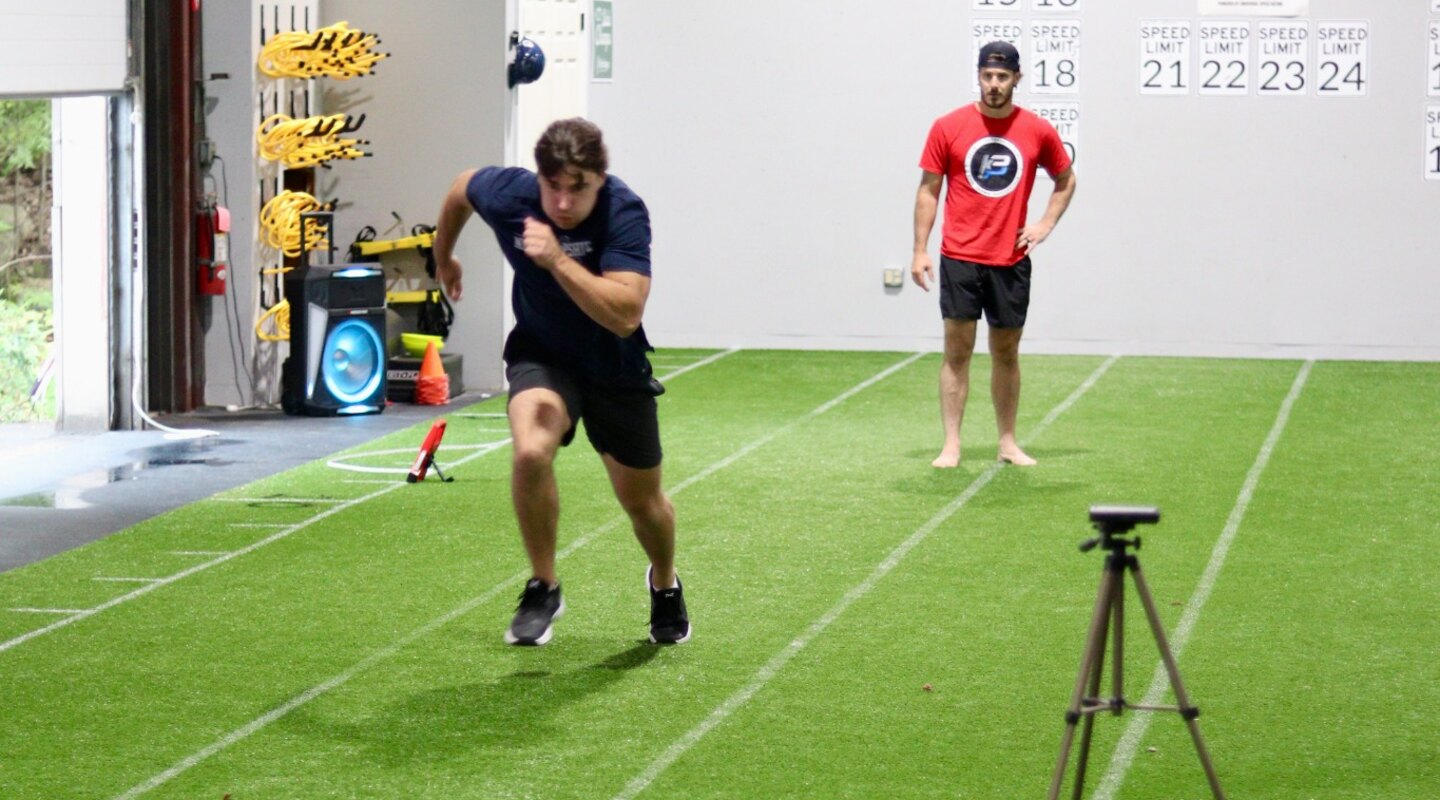
This is where good coaching becomes important. There are ways to sprint without asking a 50-year-old to line up next to a high school football player. There are ways to develop power without doing reckless exercises. There are ways to jump, throw, carry, push, pull and move quickly that can be scaled appropriately.
The answer isn't eliminating athletic movement.
The answer is coaching it.
Don't Confuse Safe With Easy
As adults get older, the fitness industry often starts treating them as increasingly fragile.
Everything gets slower. Everything gets lighter. Eventually the goal seems to become avoiding anything that might be remotely difficult.
I don't think that's the answer.
Training should absolutely be appropriate for the individual. Injury history matters. Training history matters. Age matters. Current ability matters.
But appropriate doesn't mean easy.
The goal should be finding the right challenge for the person standing in front of us.
Someone might be learning to jump for the first time in decades while the person next to them is performing a much more advanced variation. Both can be training the same quality at the correct level.
That's coaching.
And that's why I believe athletic training concepts have a place far beyond competitive sports.
What Are You Training For?
This question gets easier when you're an athlete.
There's a season.
There's a game.
There's an opponent.
There's a measurable performance.
For adults, the answer can feel less obvious.
I actually think the answer is much bigger.
You're training for the next several decades of your life.
You're training for the vacation you haven't planned yet.
You're training to play with your kids and eventually your grandkids.
You're training for the unexpected physical demands life occasionally throws at you.
You're training to maintain independence.
You're training because strength is useful.
You're training because being able to move is valuable.
You're training because your physical world shouldn't become smaller every year.
And maybe you're training simply because challenging yourself feels good.
That's enough.
Be An Athlete
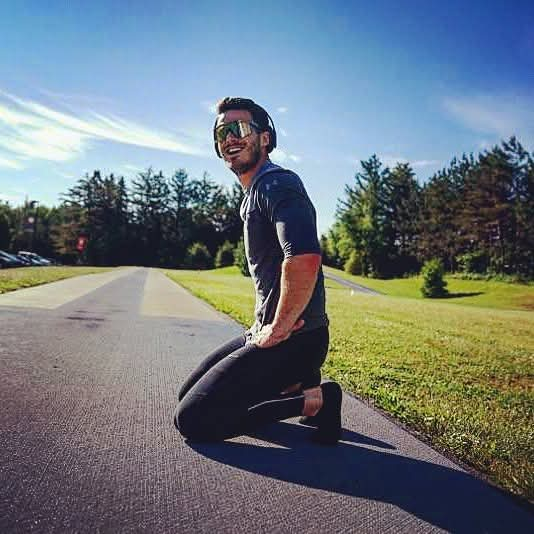
My relationship with training comes from spending a huge part of my life as a competitive athlete. I trained because performance mattered. There were numbers attached to what I did. There were races and rankings and very clear consequences for whether my training worked.
My competitive Skeleton career eventually ended.
My need to train didn't.
The reason changed.
That's the point.
Being an athlete isn't a temporary identity you have to surrender when your competitive career ends.
It can simply evolve.
At 18, being an athlete might mean trying to make varsity.
At 25, it might mean competing at the highest level you can reach.
At 40, it might mean maintaining strength, power and the freedom to do whatever you want on the weekend.
At 60, it might mean being able to do things other people your age have already decided they can't.
There isn't a finish line.
So keep lifting.
Keep moving.
Keep challenging yourself.
Keep doing things that require coordination, strength and effort.
Don't wait until you've lost an ability to decide that you miss it.
Train like an athlete for life.